 info@goodhopetutoring.com
 +1-301-717-8046



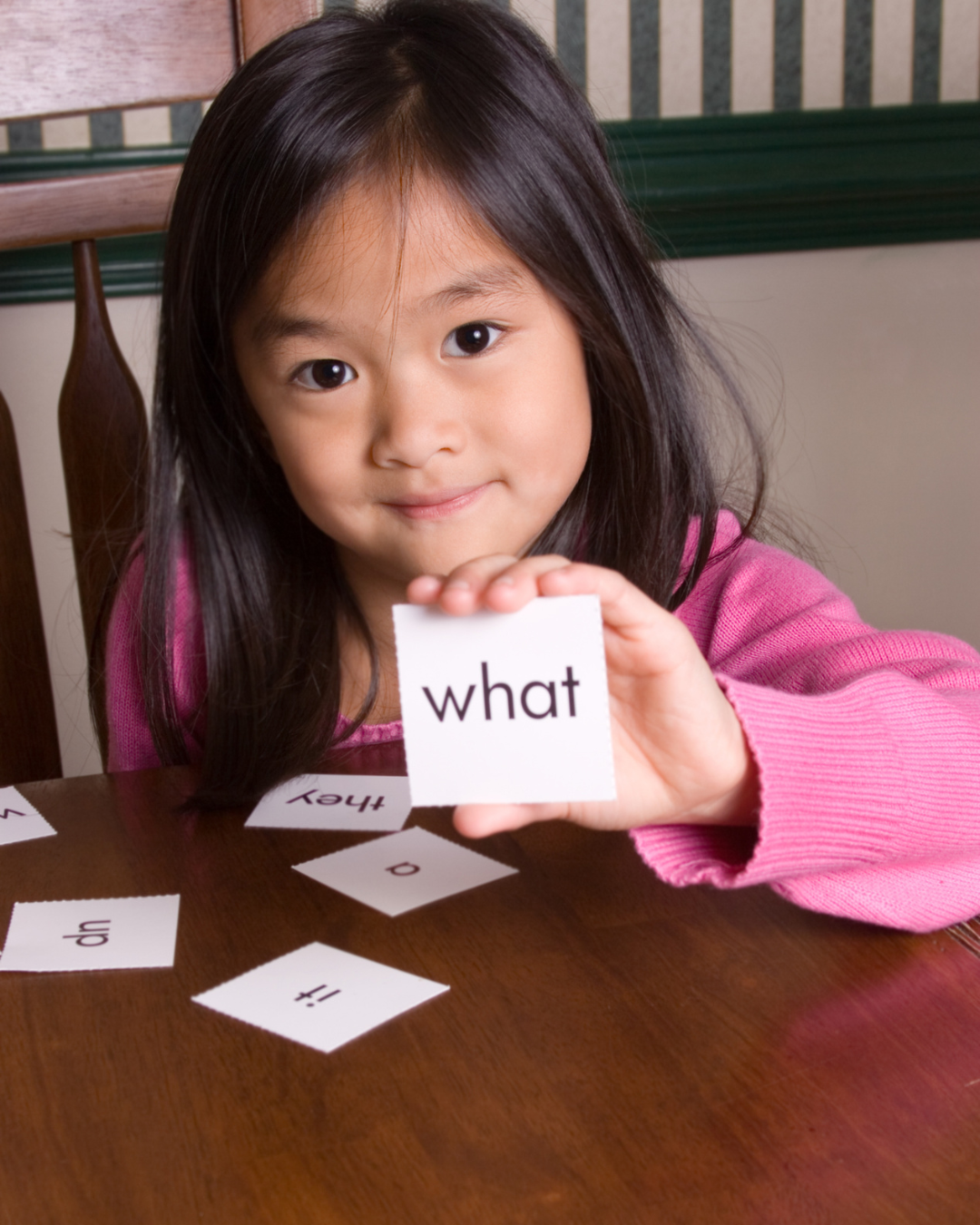
It's September, your kindergartner or first grader came home with a list of sight words, and you did what every parent does: made flashcards. And now, three weeks in, you're living the mystery that launches a thousand late-night searches: your child read "said" perfectly on Tuesday, missed it Wednesday, got it Thursday, and stared at it like a stranger on Friday.
Here's the relieving truth: your child's memory isn't broken, and neither is your effort. The flashcard-and-repeat method most of us inherited just isn't how the brain actually stores words, and reading research has gotten much clearer about what works instead. The fix takes about ten minutes a day, and it's honestly more fun than drilling.
First, What Sight Words Actually Are (It's Not What Most of Us Think)
Most parents use "sight words" to mean the list from school: the, said, was, come, here. Reading researchers use it differently, and the difference matters. A sight word is any word your child recognizes instantly, without sounding it out. The school list is really a list of high-frequency words, the 100 or so words that make up a huge share of everything kids read, which schools want recognized early so reading doesn't grind to a halt five times per sentence.
The goal, then, isn't to memorize a list. It's to move words into instant-recognition memory, and here's the crucial part: as Reading Rockets explains, the brain stores words permanently through a process called orthographic mapping, which means connecting the sounds in a spoken word to the letters that spell it. Memorizing lists of words does not build a sight vocabulary if it isn't paired with phonics and sound awareness. The brain files words by their sound-letter connections, not by their shape.
That's why pure flashcard drilling produces the Tuesday-yes, Friday-no pattern. Your child was memorizing each word like a little picture, and picture-memory holds a few dozen items unreliably. Sound-to-letter memory holds tens of thousands of words for life. Every fluent adult reader, including you, built their reading this way; sight words are the on-ramp, not a separate subject.
What Doesn't Work (Stop Doing These Guilt-Free)
Marathon flashcard sessions. Ten words drilled for twenty minutes builds frustration, not memory. Short and frequent beats long and rare every single time.
Teaching words as whole shapes. Tricks like drawing boxes around words to memorize their outline actively point kids away from the letters, which is the opposite of how words get stored.
Guess-from-the-picture prompts. When your child stalls, "look at the picture, what makes sense?" trains guessing. Point at the word instead, and help them work through the parts they can sound out.
Racing through the whole list at once. Twenty-five new words in week one guarantees shallow learning of all of them. Two to three new words a week, learned deeply, wins the year.
What Works: The Heart Words Method
Here's the shift that changes everything, and it rests on one insight: most "sight words" are more decodable than we give them credit for. Take said. The s says /s/ and the d says /d/, exactly as your child is learning in phonics. Only the middle, "ai," is irregular. So instead of memorizing four random letters, your child sounds out the regular parts and learns just one tricky part by heart, which is why teachers call these heart words.
The routine, used in classrooms built on this research and laid out well in this teacher's guide to teaching sight words with the science of reading, takes about three minutes per word:
Say the word together: "said."
Count the sounds on fingers: /s/ /e/ /d/. Three sounds.
Map the sounds to letters. Write or spell it with letter tiles: s makes /s/, d makes /d/.
Find the tricky part. "The 'ai' in the middle makes the /e/ sound here. That's the part we learn by heart." Draw a small heart over it.
Use it. Say a silly sentence with the word, then write the word once.
That five-step pass does more for permanent storage than fifty flashcard flips, because it gives the brain the sound-letter hooks it files words by. And plenty of list words (in, it, can, and) have no tricky part at all; those don't need memorizing, just phonics practice.
The No-Stress Weekly Plan (10 Minutes a Day)
Here's a rhythm that fits real family life. Total investment: about ten minutes a day, five days a week.
Monday: introduce 2 or 3 new words with the heart words routine above. That's it. Resist adding more; depth beats speed.
Tuesday: build them. Spell the new words with magnetic letters, letter tiles, or letters written on bottle caps. Mix the letters up, have your child rebuild each word while saying its sounds. Hands touching letters beats eyes scanning cards.
Wednesday: play with them. Pick one game (menu below) using this week's words plus a handful of old ones. Keep it under ten minutes and end while it's still fun.
Thursday: write them. Kids remember what they write far better than what they view. Sidewalk chalk, whiteboard, shaving cream on a cookie sheet, finger in a tray of salt. Say the sounds while writing.
Friday: hunt them. During your normal bedtime story, your child gets a "word detective" mission: spot this week's words in the book. Every found word gets a high five. This is the step most families skip and the one that matters most, because it moves the word from practice into actual reading.
The game menu (rotate, don't do all of them): word swat (words on paper, call one out, child smacks it with a spatula), memory match with two cards per word, hopscotch with words chalked in the squares, go fish with word cards, hide-and-seek words taped around a room, and "beat the timer" reading of the known-words pile. The common thread is movement and play, the same principle behind everything in our guide to cultivating a love of reading in children: kids run toward what feels like a game and away from what feels like a test.
Keep a "words I own" ring or jar. Every mastered word goes on a ring of cards or a popsicle stick in a jar. Kids don't experience a list shrinking, but they viscerally experience a jar filling, and reviewing "my words" feels like counting treasure rather than being quizzed.
How Many Words, How Fast?
Expectations vary by school, but a common benchmark is somewhere between 20 and 50 words recognized by the end of kindergarten and around 100 by the end of first grade. At two to three deeply learned words a week, your child lands comfortably in that range with time to spare, and words learned through mapping stay learned, unlike crammed lists that evaporate over breaks.
If your child is still working on letter sounds themselves, start there; sight words sit on top of sound skills, not instead of them. Rhyming games, "what sound does this start with," and letter play are the real prerequisites, the same foundations covered in our kindergarten readiness checklist.
When to Pay Closer Attention
Occasional forgetting is completely normal; that's just learning. The pattern worth watching is a child who, after months of consistent, well-taught practice, still can't hold onto even a small set of words, struggles to hear the separate sounds in spoken words, or is falling notably behind classmates despite real effort.
That combination is worth a conversation with the teacher, and possibly an evaluation, because early support changes everything for struggling readers. And remember that word reading is only half the story: the entire point of instant words is freeing the brain to understand, which is why we pair this work with the strategies in our guide to improving reading comprehension for kids.
The Bottom Line
Trade the flashcard marathon for ten playful minutes a day: map the sounds, heart the tricky part, build it, write it, hunt it in real books. That's the version reading science supports, and, not coincidentally, the version your child will actually show up for.
If reading practice at home has turned into a nightly standoff, or your early reader seems stuck despite everyone's best efforts, Good Hope Tutoring Services can help. Our tutors use evidence-based, multisensory reading instruction for students from Pre-K up, online and in person, and we've been turning frustrated readers into confident ones for 25+ years. Book a free 15-minute consultation and tell us what you're seeing.