 info@goodhopetutoring.com
 +1-301-717-8046



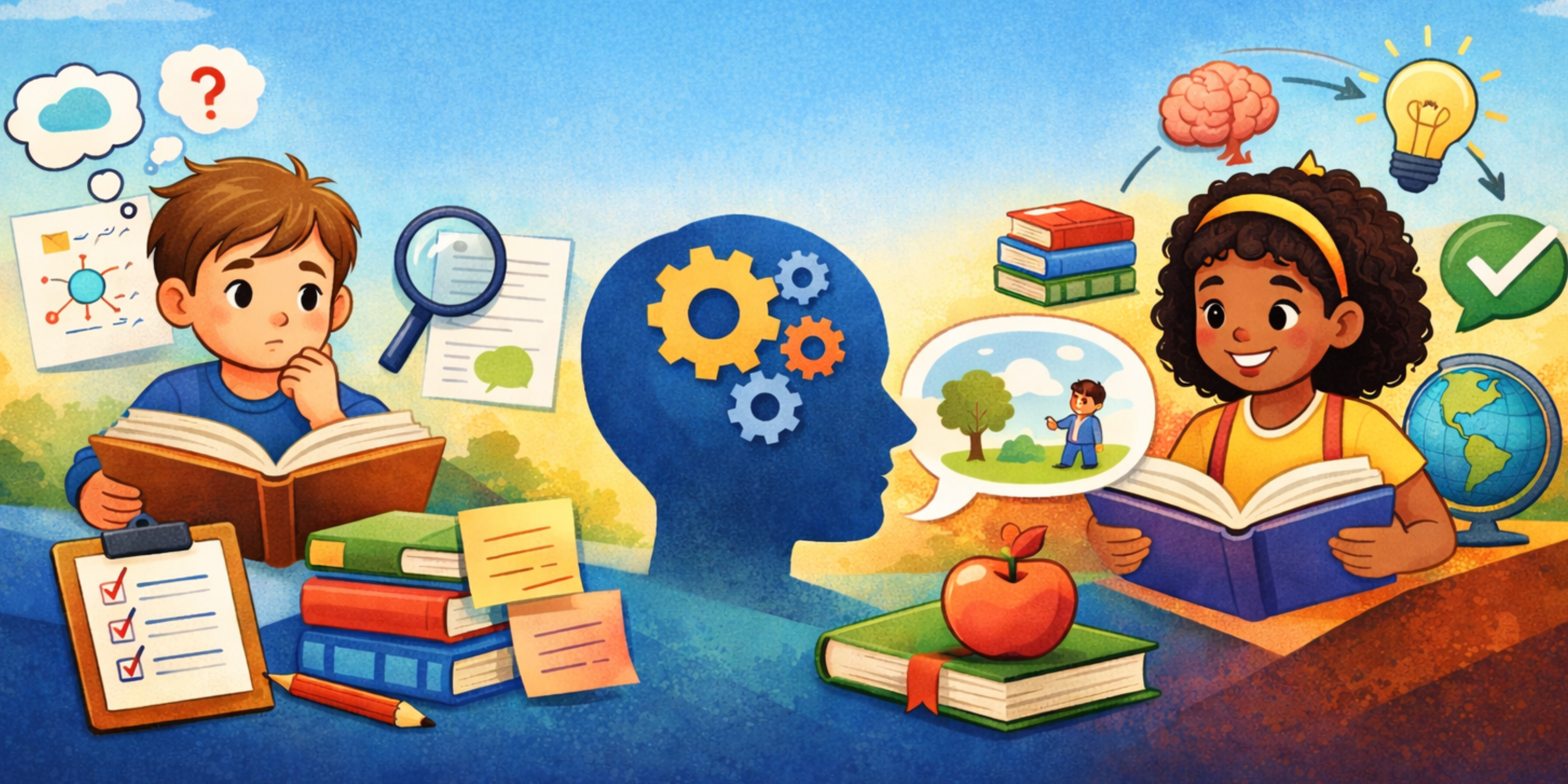
According to Reading Rockets, a leading literacy education resource, comprehension involves multiple cognitive processes working simultaneously. The good news? These skills can be taught and strengthened at any age.
In this guide, we'll explore practical, research-backed strategies to help your child become a stronger, more confident reader, whether they're in elementary school just learning to read or a high schooler struggling with advanced texts.
Understanding Why Reading Comprehension Is Difficult
Before diving into solutions, it helps to understand what makes comprehension challenging. Reading comprehension is not a single skill. It is actually a combination of many skills working together:
Decoding: The ability to sound out words accurately
Fluency: Reading smoothly and at an appropriate pace
Vocabulary: Knowing what words mean
Background knowledge: Understanding the context and concepts in the text Inference: Reading between the lines and drawing conclusions Metacognition: Monitoring whether you understand what you're reading Working memory: Holding information in mind while continuing to read
When children struggle with comprehension, the breakdown could be happening at any of these points. A child who reads slowly and laboriously is using so much mental energy on decoding that nothing is left for understanding. A student with limited vocabulary might decode perfectly but miss crucial meaning. Another child might race through text without pausing to think about what they're reading. Research from the Institute of Education Sciences identifies these comprehension components as critical intervention points.
Identifying where the difficulty lies is the first step toward helping your child improve. Our article on how to identify and support a struggling student provides additional guidance on recognizing specific learning challenges early.
Signs Your Child Struggles With Reading Comprehension
How do you know if your child has a comprehension problem versus just needing more reading practice? Watch for these red flags:
- They can read words aloud accurately but can't answer questions about what they read
- They need to reread passages multiple times to understand them
- They can't summarize or retell what they've read in their own words
- They avoid reading assignments or become frustrated when reading
- They perform poorly on reading tests despite appearing to read well
- They have difficulty making predictions or inferences about text
- They struggle to identify main ideas versus supporting details
- They can't connect what they're reading to prior knowledge or experiences
If several of these sound familiar, your child would benefit from targeted comprehension support. Many parents find that personalized reading tutoring addresses these challenges more effectively than general homework help, because tutors can pinpoint exactly where comprehension breaks down and build those specific skills.
Strategy 1: Build Background Knowledge Before Reading
One of the most powerful yet overlooked comprehension strategies is frontloading background knowledge. Children understand text better when they already know something about the topic.
How to do this:
Before your child starts reading anything—a novel, a textbook chapter, an article—spend five minutes building context. Look at the title, cover, images, and headings together. Ask, "What do you already know about this topic?" or "What do you think this will be about?"
For nonfiction, watch a short video or look at images related to the topic first. Reading about the solar system? Pull up NASA photos. Tackling a chapter about the American Revolution? Show a three-minute overview video. The importance of building background knowledge is supported by decades of cognitive science research, as detailed by cognitive scientist Daniel Willingham.
For fiction, discuss the genre, setting, or time period. If your child is reading a book about a kid moving to a new school, talk about times they've felt like an outsider or had to make new friends. This connects to what educational experts call "schema activation"—linking new information to existing knowledge.
This preview doesn't spoil the reading. It creates mental "hooks" where new information can attach. Studies consistently show that students with relevant background knowledge comprehend and retain significantly more than those who dive in cold.
Strategy 2: Teach Active Reading Strategies
Passive reading—just moving eyes across words—rarely leads to deep comprehension. Strong readers actively engage with text, and these strategies can be explicitly taught.
Annotating and marking text: Teach your child to interact physically with reading material. In books they own, they can underline important parts, circle unfamiliar words, write questions in margins, or use sticky notes for key pages. For school materials, they can jot notes on separate paper.
Even young readers can use simple symbols: a star for important information, a question mark for confusing parts, and an exclamation point for surprising facts.
Think-alouds: Model your own thinking process while reading together. Say things like: "Hmm, this character seems angry. I'm inferring that because the author said he 'slammed the door' and 'stomped away,' or I'm confused by this paragraph. Let me reread it."
This makes the invisible work of comprehension visible. Your child learns that good readers question, predict, visualize, and sometimes get confused—and that these are all normal parts of active reading.
The pause-and-process technique: After each page or section, have your child stop and briefly summarize what happened or what they learned. This can be as simple as: "Tell me three things from that page" or "What just happened in this chapter?"
This prevents the common problem of reaching the end of a chapter and realizing they retained nothing. It also builds the metacognitive skill of monitoring comprehension, which means noticing when understanding breaks down.
Strategy 3: Strengthen Vocabulary Systematically
Vocabulary knowledge and reading comprehension are inseparably linked. Students can't understand text filled with words they don't know, and they can't build vocabulary without reading. It's a chicken-and-egg problem, but there are ways to break the cycle.
Pre-teach key vocabulary: Before your child reads, identify 3-5 essential words they'll encounter and teach them explicitly. Don't just provide definitions. Use the words in sentences, show images, discuss related words, and have your child use them in conversation.
For example, if the word is "reluctant," you might say: "Reluctant means unwilling or hesitant to do something. I was reluctant to try sushi the first time. When have you been reluctant to try something new?"
Use context clues strategically: Teach your child the different types of context clues: definitions (the text explains the word), examples (the text gives instances), synonyms (similar words nearby), antonyms (opposite words), or inference (figuring it out from the overall meaning).
Practice this skill with sentences: "The arborist, a person who cares for trees, examined the old oak." What's an arborist? How did you know?
Keep a word collection: Have your child maintain a notebook of interesting or challenging words they encounter, with definitions in their own words and original example sentences. Review these words periodically. Making the list physical rather than digital tends to improve retention.
For students who need more intensive vocabulary support, working with a reading tutor who can systematically build word knowledge while teaching comprehension strategies can accelerate progress significantly.
Strategy 4: Ask the Right Questions
The questions you ask about reading matter enormously. Many parents default to basic recall questions: "What happened in this chapter?" or "Who is the main character?" While these have their place, they don't develop deep comprehension skills.
Use a questioning hierarchy:
Start with literal questions (answers are directly stated): "Where did the story take place?" "What did the character do next?"
Move to inferential questions (require reading between the lines): "Why do you think the character made that choice?" "How is the character feeling, and what clues tell you that?"
Progress to evaluative questions (require judgment and connection): "Do you agree with what the character did?" "How would you have handled that situation?" "How does this connect to something else you've read or experienced?"
The goal is to spend most of your question time in the inferential and evaluative categories. This is where real comprehension develops.
Open-ended questions work better than yes/no questions: Instead of "Did you like the book?" try "What did you think about how the author ended the story?" Instead of "Was the character brave?" ask "What evidence shows us whether the character was brave or not?"
These questions require children to think, synthesize information, and articulate their understanding—the exact skills that build comprehension.
Not sure where to start with comprehension questions? Schedule a free consultation to discuss your child's current reading level and get personalized strategies for asking questions that develop deeper understanding.
Strategy 5: Visualize and Make Mental Movies
Strong readers create mental images as they read—they "see" the story or information unfolding in their minds. Struggling readers often don't do this automatically, but visualization can be taught.
For younger readers: Read a descriptive passage aloud and have your child draw what they pictured. Then read it again and let them add details. Discuss how the words created images in their mind.
For older students: After reading a paragraph or page, ask: "What did you picture in your mind?" or "If this were a movie, what would you see on screen right now?"
Encourage sensory details beyond just visual: "What sounds would you hear?" "What might it smell like?" "If you were the character, what would you be feeling?"
This strategy is particularly powerful for fiction but works for nonfiction too. Reading about the water cycle? Visualize a drop of water evaporating from the ocean, forming a cloud, falling as rain.
Some children benefit from actually drawing or acting out what they read, making the abstract concrete. This aligns with multisensory learning approaches that engage different learning styles and strengthen neural pathways.
According to Understood.org, a leading resource on learning differences, multisensory techniques particularly benefit students with dyslexia and other reading challenges. Our guide on the benefits of multisensory learning explores these techniques in greater depth.
When to Seek Professional Reading Support
While these strategies can make a significant difference, some children need more intensive, systematic intervention. Consider seeking professional help if:
- Your child is more than one grade level behind in reading
- They've been struggling for more than six months despite consistent home practice
- Reading difficulties are affecting their performance across multiple subjects
- They're developing negative attitudes about reading or school in general
- You suspect an underlying learning difference like dyslexia
- Your child has been identified as needing special education services for reading
Professional reading tutors can assess exactly where comprehension breaks down and provide targeted, evidence-based instruction that addresses your child's specific needs. This is particularly important because reading gaps tend to widen over time—the "Matthew effect" where strong readers get stronger while struggling readers fall further behind.
Concerned about your child's reading comprehension? Book a free 15-minute consultation to discuss their specific challenges and learn how our evidence-based reading instruction can help them become confident, capable readers.